
Andy Burnham spent a decade arguing that Whitehall should trust the places it governs. Now, in his first major test on the question as Prime Minister, he has told Wales that four of its biggest demands are off the table. In a letter to First Minister Rhun ap Iorwerth, first reported by BBC Wales, Burnham said he was “not persuaded” by the case for devolving policing, justice, the management of the Crown Estate or rail infrastructure to Cardiff.
The reaction from the Plaid Cymru-led Welsh Government was swift. Ap Iorwerth told BBC Radio Wales Breakfast he was “pretty gobsmacked”, adding that “this is about Westminster saying, ‘we decide, it doesn’t matter what the people of Wales think’.” A spokesperson for the First Minister went further, accusing Burnham of “turning his back on devolution” and saying that when he talks of driving power out of Whitehall, “he only means to the regions of England.”
What the letter says
The letter, which WalesOnline has published in full, follows talks between the two leaders at the National Economic Council in Glasgow on 30 October, a meeting both sides had described as productive. On policing, Burnham wrote that he wants the Welsh Government to “play a clear role in the governance of policing in Wales”, but that legislative devolution is not needed to achieve it. “The integrated England and Wales policing system is essential to maintaining interoperability, enabling seamless cross-border working and ensuring forces in Wales can draw on national and specialist capabilities,” he said.
On the Crown Estate, which owns the seabed off the Welsh coast and whose revenues flow to the Treasury, the Prime Minister argued that its “scale, financial capacity and specialist expertise” were the best way to secure investment in floating offshore wind in the Celtic Sea. The UK government, he wrote, was “not persuaded by the case for devolving the management of The Crown Estate in Wales, nor to prepare now for a future transfer.”
Rail got the same answer. Burnham said infrastructure is “best done by the new Great British Railways” working with Transport for Wales, and that full devolution “would fragment the current system.” He pointed instead to a pipeline of Welsh rail projects valued at up to £14 billion and a plan to move governance of Welsh rail enhancements to the Wales Rail Board.
The letter is careful to dress the refusal in money. It lists £2.5 billion for nuclear power on Ynys Môn, £500 million for the electric arc furnace at Port Talbot, £445 million for Welsh rail and an extra £450 million for the Welsh Government after the Budget. It also offers “policy sprints” on regional growth, possible devolution of employment support and a “roadmap to further fiscal flexibility” now under discussion with the Treasury.
A split inside Labour
The political cost may land hardest on Burnham’s own party. As Nation.Cymru notes, the decision puts him at odds with Welsh Labour leader Ken Skates, who told his party’s conference in Llandudno only last weekend that devolving policing and the Crown Estate remained Labour policy. Burnham used the same conference to promise Welsh communities “real power over the decisions that shape their lives”, without saying which powers he meant.
Former First Minister Mark Drakeford said he was “disappointed”. “I don’t think he quite understands how different things are when you talk about a country, with the Senedd,” he told the BBC, adding that the case would now have to be made “within the Labour party internally.”
Welsh Secretary Stephen Kinnock defended the line, warning that the changes would have led to “destabilisation and fragmentation and disintegration”, and describing what remained as “a bold and ambitious offer” on fiscal powers, employment support and reindustrialisation. Kinnock had signalled his scepticism soon after his appointment in July, when he said he was “not entirely convinced” more powers would help people in Wales.
The Welsh Liberal Democrats seized on the contrast with Burnham’s years as Mayor of Greater Manchester. “Andy Burnham spent years telling Westminster to trust Manchester with more power. Now he’s in No 10, he owes Wales an explanation,” said leader David Chadwick MP.
Why it matters
The refusal comes only three weeks after Burnham said in Glasgow that the four nations should “move at the same pace together”, and after he had previously described himself as “open” to devolving policing. The Welsh Government had named all four areas as its immediate priorities in a written answer to the Senedd on 11 November, and ap Iorwerth has said Wales should hold the same powers as Scotland.
For a Prime Minister whose brand was built on regional empowerment, the letter draws a clear boundary. Burnham’s model of devolution is about cities, regions and combined authorities inside a single England and Wales legal system, not about moving further sovereignty to a national parliament in Cardiff. That distinction may be coherent in Whitehall, but in Wales it reads, in ap Iorwerth’s words, as a settlement that is “unfair, unjust and unsustainable.”
With Plaid now in government in Cardiff and Welsh Labour still recovering from its historic defeat, the row hands the nationalists a ready-made argument and leaves Labour’s Senedd members defending a policy their own leader in Wales opposes. Burnham has left the door ajar on money and process. On power itself, for now, it is shut.
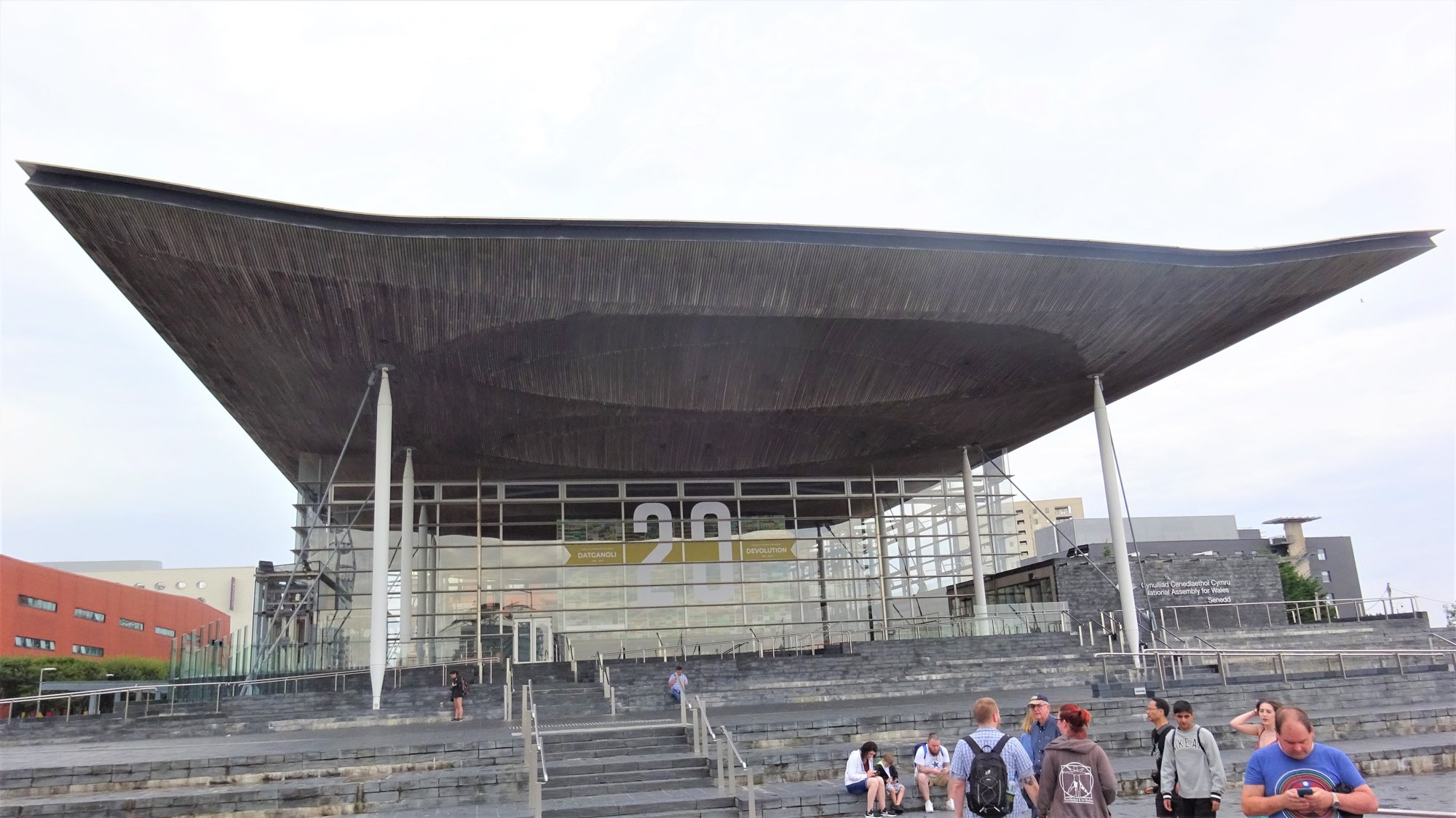
Featured image: The Senedd, Cardiff Bay, South Wales, by Rosser1954, via Wikimedia Commons, licensed CC BY-SA 4.0.


+ There are no comments
Add yours