
The European Union has told Andy Burnham that the era of piecemeal Brexit “resets” is drawing to a close, and that Brussels will not open talks on Britain’s longer-term relationship with the bloc until the government decides whether it actually wants to reverse its exit. The message, relayed by EU diplomats to the Guardian on Wednesday, lands less than 48 hours before the Prime Minister travels to Brussels for the second UK-EU summit on Friday 20 November.
“Clarity is what we need more than anything from the UK. Don’t come back until you know what you want. Work out what your options really are and then come to negotiate,” one EU diplomat said. Another added that the prime minister “needs to bring the public with him”, warning: “We can’t have another negotiation based on just half the country. We’ll only put the effort in if we know it’s not going to change down the line.”
A buffet, not a menu
The reset model, designed under Keir Starmer, has relied on a series of narrow agreements negotiated one at a time. Senior EU diplomats now say that approach will quickly “reach its limits” and that further “mini deals” make little sense. One compared the relationship to a buffet: “you can choose to nibble on one or two dishes to start, but at a certain point you have to go for the whole of the buffet.”
That puts real pressure on the timetable Downing Street had in mind. According to the Guardian’s reporting, Burnham is not expected to set out the full range of options (the status quo, a customs union, the single market or full rejoining) until he announces his 10-year plan in December. Government sources said ministers were weighing a year-long “national conversation” in 2027, with town halls and citizens’ assemblies, before choosing a route ahead of the next election. Brussels officials are reportedly alarmed by the length of that process, particularly after the launch of a new pro-Brexit campaign, Stay Out, by architects of the 2016 Vote Leave operation.
What Friday should deliver
The door is not closing on Friday itself. A leaked draft of the 72-paragraph joint statement, reported by Euronews and the Guardian, shows the two sides have all but finalised an agreement on agrifood standards that would remove certificates and checks on “the vast majority” of animal and plant products traded between Great Britain and the EU from 1 March 2028. They are also expected to confirm a link between the UK and EU emissions trading systems, which would spare British exporters from carbon border levies, although the draft sets no start date.
The government has put numbers on both. A GOV.UK factsheet says the food and drink deal “could add up to £5.1 billion a year” to the economy, while the emissions linking agreement could add up to £3.8 billion a year and protect industries such as steel and aluminium from a carbon tax on roughly £6.5 billion in exports. It insists none of the core deals require payments into the EU budget.
Youth mobility remains the most politically charged element. The proposed Youth Experience Scheme would let young people live in each other’s territory for up to three years to work, study, volunteer or travel. The draft aims to seal the agreement by 2028 and have it running by January 2030. EU diplomats told the Guardian the two sides were expected to settle on about 100,000 participants a year, after the UK initially pitched 50,000 and then 80,000. Agence Europe reported that as of Wednesday the figure was still blank in the text. Tuition fees for EU students have been moved into a parallel track, with the draft offering either equal treatment or “significantly reduced undergraduate fees”.
The sticking points
Several issues are likely to run to the wire. Integration into the EU electricity market, which could ease some of the highest power prices in Europe, has slipped into 2027, with Brussels seeking a financial contribution to its funding for poorer regions. The EU also wants Britain to align with its trade defence measures, such as tariffs on Chinese electric vehicles, in return for inclusion in “Made in Europe” rules. London is pushing softer wording, promising only to “aim to protect supply chains consistently across our markets”. A Cabinet Office source described that language as “the highest jeopardy” in the talks.
Pressure at home
The domestic politics are moving just as fast. On Wednesday the Conservatives used an Opposition Day debate to argue that taxes, product standards and migration rules “should be set by the UK Parliament, not the European Union”, according to the Commons Order Paper. Inside Labour, the pull is in the opposite direction. Former business secretary Peter Kyle said Burnham should fight the next election on a promise to rejoin, with a referendum on any deal, joining David Lammy and Rachel Reeves in calling for Britain’s future to be back inside the bloc.
Once Friday’s package is signed, the government plans a European partnership bill covering food and agriculture, emissions trading and youth mobility, expected before Christmas. Burnham is due to set out his own next steps on Monday. The message from Brussels is that whatever he says, the next phase will be decided in Britain first.
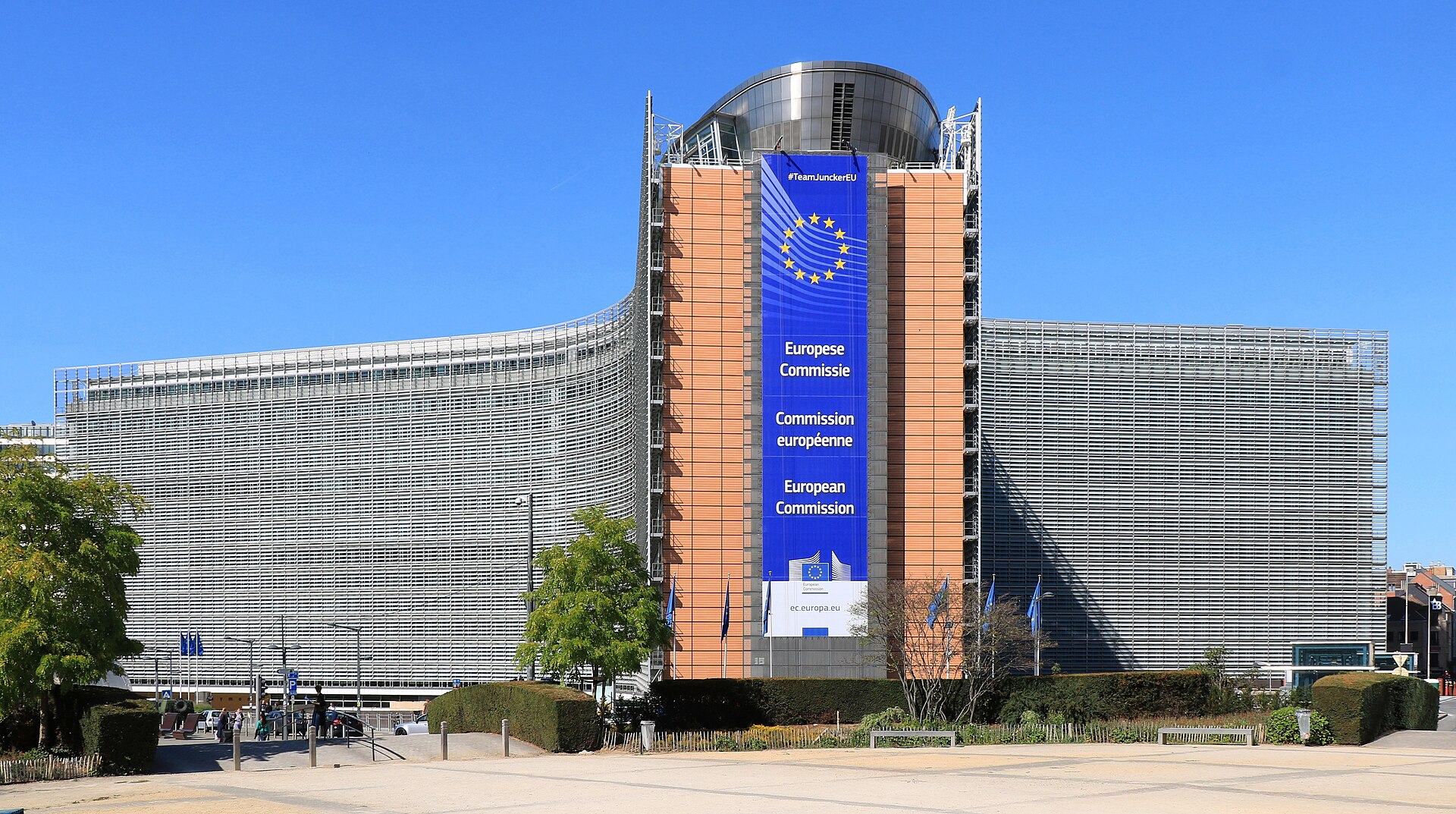
Featured image: The Berlaymont building, headquarters of the European Commission, Brussels. Photo by EmDee via Wikimedia Commons, licensed under CC BY-SA 4.0.


+ There are no comments
Add yours