
Britain’s flagship anti-drone laser, once sold as the weapon that would put the Royal Navy at the leading edge of NATO, is being cut back. Orders for the DragonFire system have been reduced from four units to two, the budget for directed energy weapons has been roughly halved, and a separate radio wave weapon built to knock out drone swarms has been halted, according to reporting by The Sun and The Telegraph.
Ministry of Defence sources told The Sun that DragonFire will not now enter service until 2028 at the earliest. The Telegraph reported that Wes Streeting, the Defence Secretary, had halved the order, a decision his Conservative opposite number described as “penny-pinching”.
What was promised
The retreat is stark when set against the government’s own announcements. In June 2025, alongside the Strategic Defence Review, the MoD and the Treasury pledged “nearly £1 billion for Directed Energy Weapons (DEW) this Parliament”. That release said DragonFire would be integrated on four Royal Navy warships, with the first ship fitted in 2027, and that it was “set to be the first high power laser capability entering service from a European nation”.
Five months later, in November 2025, ministers awarded MBDA UK a £316 million contract, working with QinetiQ and Leonardo, to deliver DragonFire to the Navy from 2027. The MoD said the laser had shot down drones flying at up to 650km/h on the Hebrides range, cost about £10 a shot and was accurate enough to hit a £1 coin from a kilometre away. It promised a Type 45 destroyer would be fitted “five years faster than originally planned”. A Lords written answer in March 2026 confirmed that contract covered “the first two DragonFire units”.
The money trail
The scale of the cut was hiding in plain sight. In a written answer on 2 November, defence minister Luke Pollard told the shadow defence secretary, James Cartlidge, that following the Defence Investment Plan the MoD had allocated £490 million “for the development of Directed Energy Weapons, including the DragonFire programme” up to and including 2029-30. He added that year-by-year DragonFire spending would be “balanced within the available budget against other directed energy projects”. That is about half the figure trumpeted in 2025.
The Defence Investment Plan itself, published on 30 June 2026, followed months of Whitehall conflict that the House of Commons Library notes prompted the resignation of the previous Defence Secretary, John Healey, and Armed Forces Minister Al Carns. It added £15 billion for defence over four years, taking planned spending to £298 billion, but it also forced hard choices. Earlier in the year, service chiefs had warned of a £28 billion funding shortfall over the same period.
The radio wave weapon
The second casualty is Project Ealing, the radiofrequency directed energy weapon demonstrator developed by a Thales UK-led consortium. In trials in West Wales in April 2025, the MoD said soldiers had tracked and defeated more than 100 drones, including two swarms in a single engagement, at an estimated 10p per shot and ranges of up to 1km. More than £40 million had been invested in the technology. The Sun reports the programme has been “stopped in its tracks”.
The MoD’s response was brief. “DragonFire is coming into service. Project Ealing was always just a trial,” a spokesman told The Sun. The statement did not address the number of units or the timetable.
A political fight over priorities
Mr Cartlidge framed the decision as a choice between welfare and war readiness. “These energy weapons promise so much. If we want to break the drone stalemate of modern warfare we’ll need technology that can counter it,” he said. “It’s incredibly disappointing that Labour’s failure to cut welfare and fund defence means that they’re once again prioritising penny pinching over war readiness.”
Why it matters
The underlying military logic for lasers has only strengthened since 2025. Cheap drones have reshaped the war in Ukraine, and the cost of downing them with missiles worth hundreds of thousands of pounds is unsustainable for any navy. The Sun notes that Ukraine claims to have already shot down a jet-powered Russian drone with a laser, while Britain’s own system slips to the right.
Closer to home, the same report quoted Lieutenant Commander Sam Fields, captain of the patrol ship HMS Tyne, who said his vessel had experienced GPS jamming in the Channel. He did not blame Moscow, but estimated that Russian naval activity had risen by between 50 and 70 per cent since the invasion of Ukraine.
Ministers can fairly argue that the contracted order was always for two units, and that the investment plan still commits money to counter-drone and air defence. But the 2025 promise of four laser-armed warships, a first-in-Europe service date of 2027 and close to £1 billion of funding has now been diluted on all three counts. The questions for the MoD are simple: which Type 45 will receive DragonFire, when, and whether the remaining two ships have been cancelled or merely deferred.
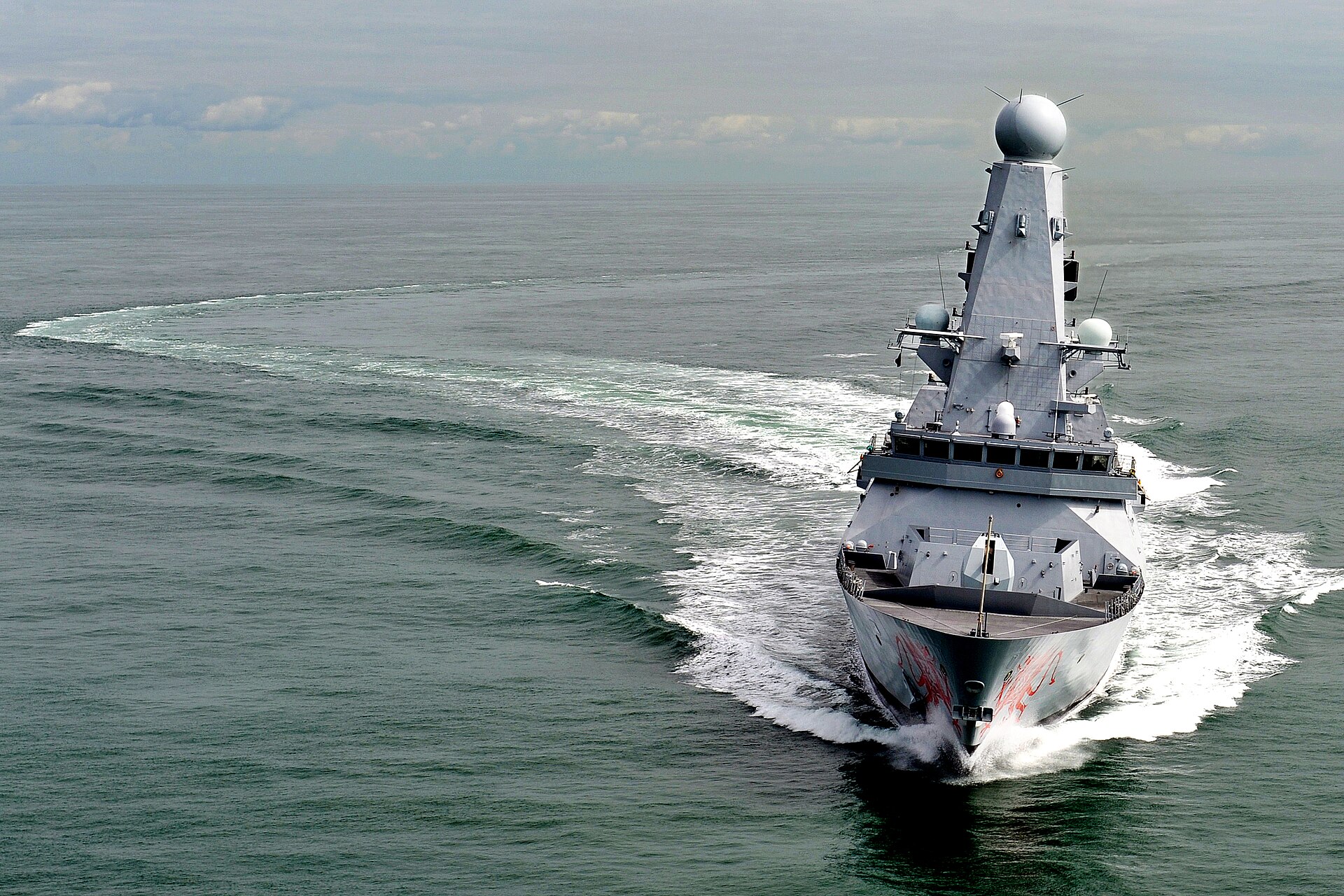
Featured image: Type 45 destroyer HMS Dragon in the English Channel near Portsmouth. Photo by LA(PHOT) Nicky Wilson, Royal Navy, via Wikimedia Commons, licensed under the Open Government Licence v1.0.


+ There are no comments
Add yours